How Internal Comms can spark AI adoption
How Internal Comms can spark AI adoption
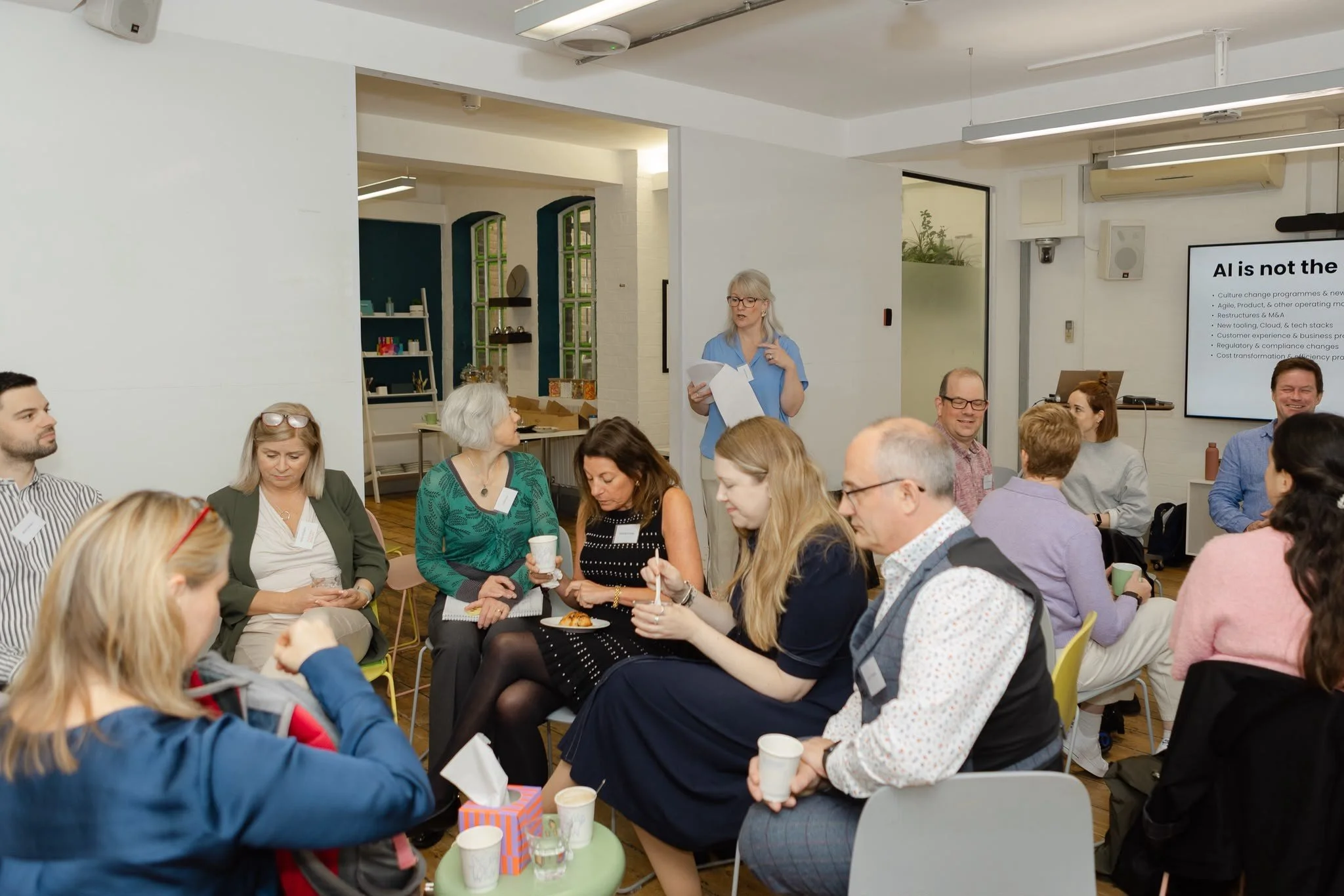
On a cold June, morning, we welcomed around forty communicators to a workshop on a theme that is very topical at the moment: How Internal Comms can spark AI adoption.
We were joined by Becky Williams, Communications Consultant and Coach, and Paul Middleton, Internal and Change Communications Consultant (currently contracting at Flutter Entertainment); who shared with us how comms teams can start adapting, reduce fear, encourage safe experimentation, support leadership role‑modelling and build momentum that spreads beyond the early adopters.
As Becky Williams put it, we’re at a moment of real ambiguity. There isn’t a settled approach. Even at senior levels, people are still working out what AI means in practice. And there’s a common assumption in organisations: that someone, somewhere, has a clear plan for AI adoption.
That uncertainty came up again and again across the session - and it’s shaping how organisations respond.
AI is already changing how work gets done
My own perspective is this isn’t theoretical. AI is already reshaping how organisations work.
I shared some examples of how AI is impacting us and what we do at HarknessKennett:
Recruitment tools that should simplify hiring, but still need human intervention to find the right candidates
Client Teams stepping back in to sense-check or refine AI outputs
Transformation programmes already focused at reducing administrative and junior roles.
I mentioned one client, where they have already introduced a programme to reduce around ten per cent of its London workforce, focusing on roles responsible for drafting and content creation.
It raises the bigger question. If entry-level roles reduce, how do organisations build future capability? From my experience, it’s not something many leadership teams have fully addressed yet.
The biggest barrier isn’t technology
If the tools are already here, what’s holding organisations back?
For Becky Williams, the answer is clear: it’s not technology, it’s uncertainty. She described a conversation with a Chief Technology Officer (CTO) who admitted that even at board level, leaders don’t have clear answers - and struggle to communicate through that uncertainty. Which means communicators, leaders and technologists are effectively working it out together.
Adoption is a human challenge
Across the discussion, one theme was consistent: AI adoption is less about capability, and more about behaviour. Becky highlighted three barriers in particular:
Fear — about job security or getting things wrong which is preventing people getting started
Trust — especially when content feels AI-generated
Clarity — understanding what AI actually means day to day
On trust, she referenced recent IOIC research showing that one in three people are less likely to trust content they believe has been created by AI. And that matters for all of us working in communication.
A shift for internal communications
Becky says this creates a turning point for internal communications teams. If the role is seen mainly as content creation, output driven, AI will quickly change its value.
Instead, the focus needs to shift towards:
Helping people make sense of change
Supporting leaders to communicate honestly
Building understanding and trust
She described AI as an “Iron Man suit” - a way to take on the repetitive, process-driven work, and create space for the more human side of communication.
It’s a useful distinction:
“Left brain” work — drafting, formatting, processing
“Right brain” work — judgement, empathy, connection
AI can support one. But people are still essential for the other.
Why traditional change approaches don’t quite work
Paul Middleton, shared some recent experience from Flutter. His starting point was simple: AI change programmes aren’t like traditional transformation programmes.
Why? Because The end point is unknowable. The technology is evolving quickly, and new uses appear all the time. That makes long-term, highly structured plans difficult to maintain.
What worked in practice
Rather than a top-down rollout, Paul described a more organic model.
The focus was on:
Identifying early adopters
Giving them space to experiment
Letting others see what was possible
Advocating a viral change campaign
He described building a group of “disruptors” who could show, rather than tell, how AI could be used. These disruptors are much more than the usual change champions, of which we’re all familiar. They’re more AI Catalysts.
What creates momentum
From Paul’s experience, a few things make a tangible difference:
Regular use
People build confidence by using AI in their day-to-day workVisible results
One example he shared was a product feature delivered in five days, compared to a previous three-month timelineSharing stories
Flutter created a “trophy cabinet” - a collection of short examples showing what teams had achieved using AI
Some practical examples, that are helping build momentum.
The role of leadership
There was also a clear message for leaders.
Paul emphasised that leaders shouldn’t feel pressure to have all the answers - particularly when the planning horizon is often only three to six months. What matters more is how they respond.
That means:
Being honest about uncertainty
Answering difficult questions with empathy
Avoiding promises they may not be able to keep
As Paul put it, part of the role is “smashing down doors” that prevent teams from moving at pace.
Where to start?
Becky and Paul engaged the participants and there was agreement that progress doesn’t necessarily come from large-scale programmes.
It comes from smaller, practical steps:
Use AI tools regularly to build understanding
Looking at your team’s work and identify what could be automated
Support early adopters and give them visibility
Capture and share examples of what’s working
Focus on reducing friction wherever possible
None of these are complicated. But together, they create movement.
A moment of opportunity
There’s still a lot we don’t know about how AI will shape organisations. As Becky put it, that lack of a playbook can feel uncomfortable. But it also creates a level playing field. And for internal communications in particular, it’s an opportunity. To move beyond content delivery - and play a more central role in helping organisations navigate change.
How is AI adoption showing up in your organisation at the moment? What’s working - and what isn’t?
A first step is to understand how your organisation is embracing AI and know how your IC team will respond. Have you the skills to support the transformation and people focused on outcomes, and not just outputs? Now maybe’s the time to review and audit and understand the value your team is adding. If we can help at all, or you’d like to talk about how IC can support AI adoption, we’d welcome the conversation!
Published by James












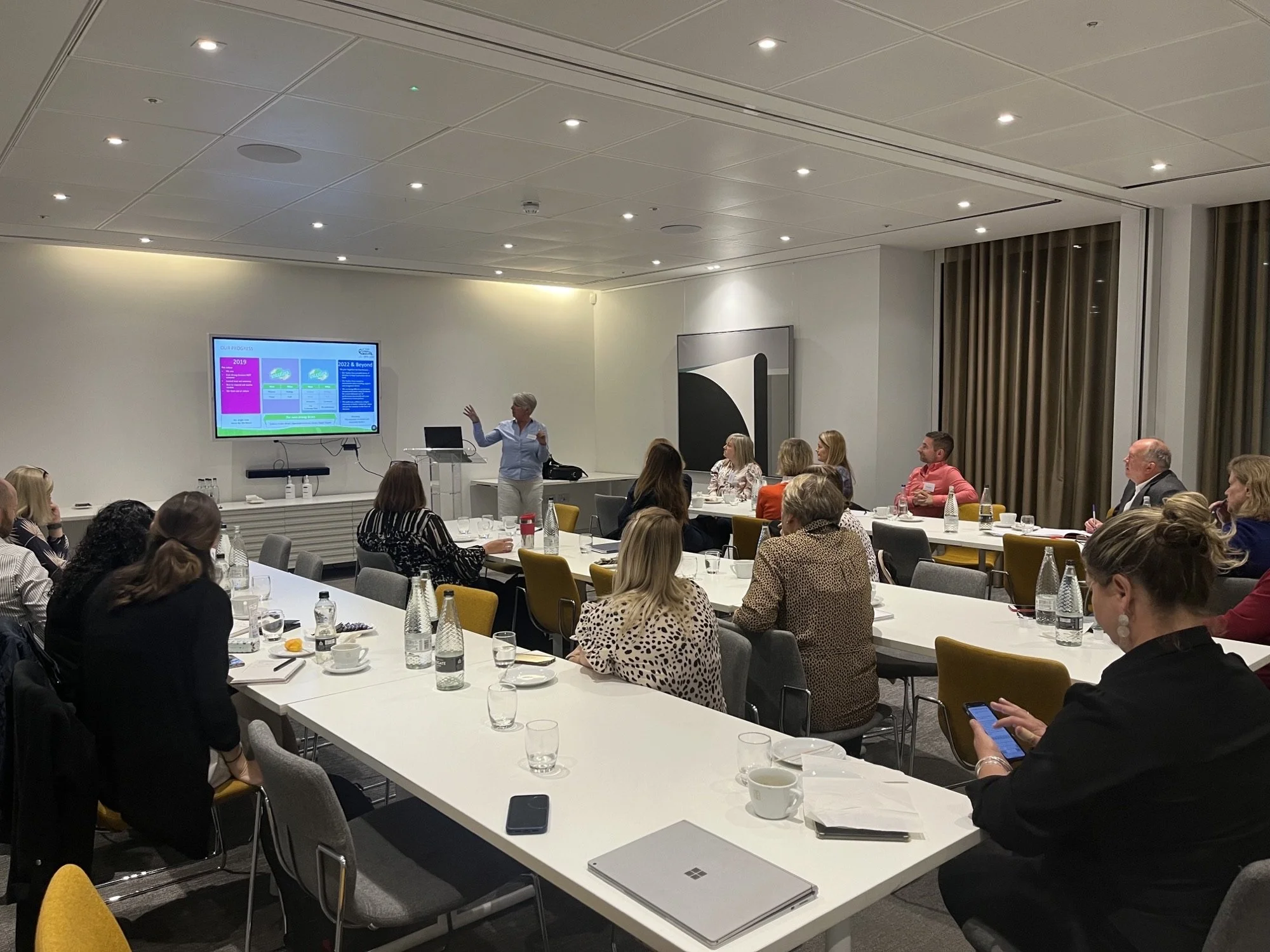


On a cold June, morning, we welcomed around forty communicators to a workshop on a theme that is very topical at the moment: How Internal Comms can spark AI adoption.
We were joined by Becky Williams, Communications Consultant and Coach, and Paul Middleton, Internal and Change Communications Consultant (currently contracting at Flutter Entertainment); who shared with us how comms teams can start adapting, reduce fear, encourage safe experimentation, support leadership role‑modelling and build momentum that spreads beyond the early adopters.