
Eek! That page doesn’t exist.
When things go wrong, we get you back on track. Were you looking for something specific?
If not, you can learn more about our services, how we can help with resourcing, or browse some choice cuts from our blog.
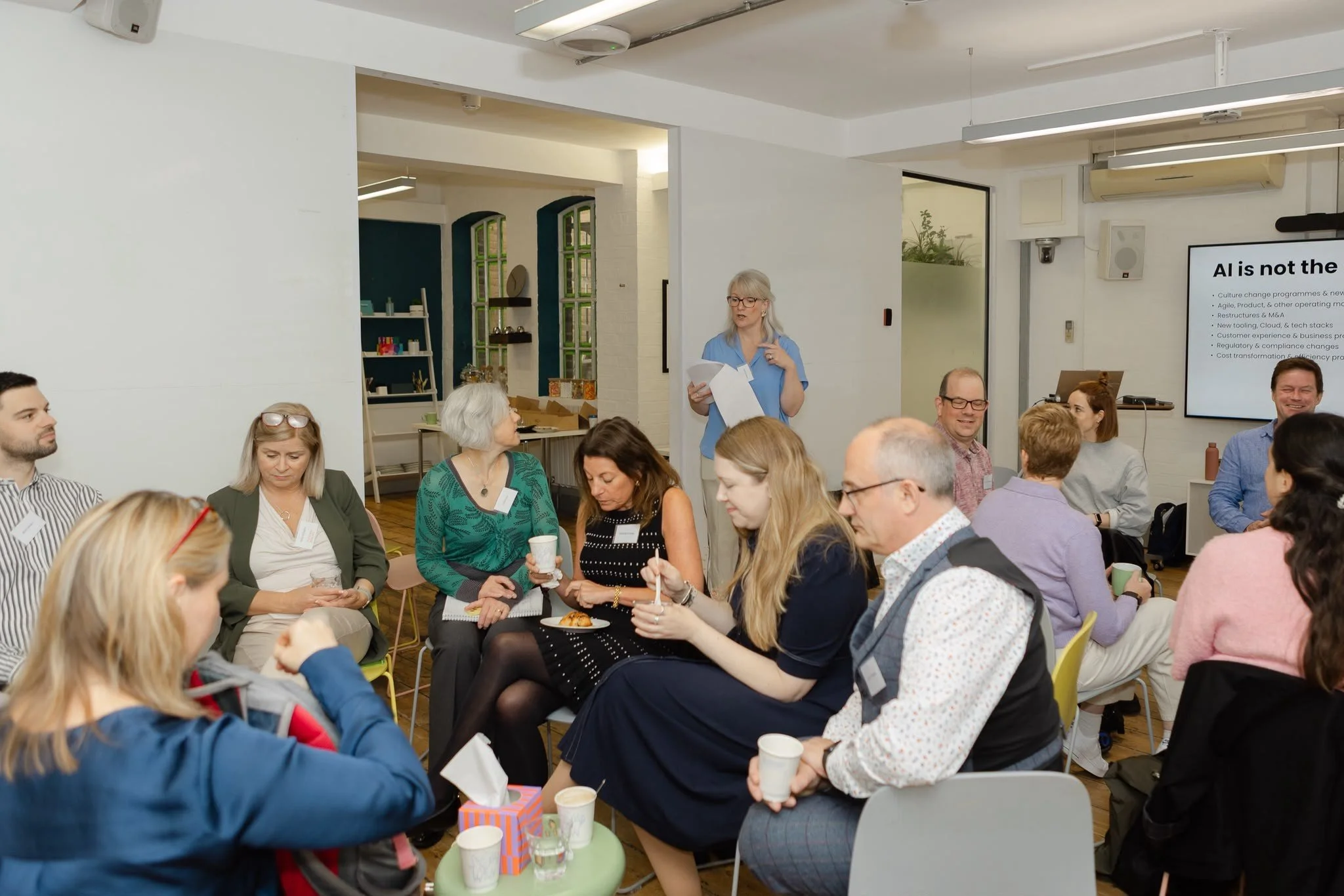
On a cold June, morning, we welcomed around forty communicators to a workshop on a theme that is very topical at the moment: How Internal Comms can spark AI adoption.
We were joined by Becky Williams, Communications Consultant and Coach, and Paul Middleton, Internal and Change Communications Consultant (currently contracting at Flutter Entertainment); who shared with us how comms teams can start adapting, reduce fear, encourage safe experimentation, support leadership role‑modelling and build momentum that spreads beyond the early adopters.

How do internal communicators demonstrate they’re making a meaningful difference - not just generating clicks or impressions, but genuinely shifting understanding, behaviour, and business performance?
That question shaped our session on Wednesday 11th March, Designing Meaningful Measurement: Aligning Internal Comms to Outcomes That Matter.

On the wet and windy morning of Wednesday 19th November, we welcomed internal communicators, HR and business leaders to an in-person breakfast briefing in London to explore a topic that’s on everyone’s mind right now:
How is AI really changing internal communications – and what should we do about it?

On Wednesday, September 10th, we gathered virtually for a powerful session exploring neuroinclusive communication - an increasingly vital topic as organisations embrace cognitive diversity and strive to create truly inclusive workplaces.

Good internal communication is evident when people understand how their day-to-day work contributes to the firm’s goals. It’s called the Kennedy moment. When in 1962 Kennedy visited NASA for the first time, he asked a janitor carrying a broom what he did, to be told “I’m helping put a man on the moon.”

A packed room at the Sutherland Labs in Covent Garden gathered to hear what Being your Best in 2025 was all about. This was a different format from the usual HarknessKennett networking breakfasts which have over the years featured case studies and best practice on a range of issues across many sectors.

Unbelievably, October is already in full swing, but the good news is that it was time for another of our networking breakfasts! We love these sessions, and the enthusiasm that participants and speakers alike bring as they enjoy the opportunity to share great case studies and discuss strategies with peers (old and new) is inspiring.

For as long as I’ve been in comms, line managers have come in for a bit of stick. Lots of blame for poor communication is placed at the feet of these poor individuals who are expected to deliver against a staggering array of responsibilities – everything from performance targets to staff development, innovation to cost control – and in the middle of that we want them to ‘deliver communication’ as well. Line managers are often seen as a tricky middle layer where communication gets ‘stuck’, and which seems impermeable to frustrated comms teams and senior leadership. But is it fair to blame them, or should we be blaming the comms team, senior leaders….or someone else?

In our most recent HarknessKennett networking session, we brought together three guest speakers, career coach Vicky Marinker, hiring manager Amy Knights-Whitton, and experienced communications professional Claire Lucraft, to discuss how the market is changing and what communications professionals can do to remain visible, relevant and in demand.