Driving performance through communication
How do you get 3,500 people, working across more than 150 locations to see the part they play in improving operational performance?
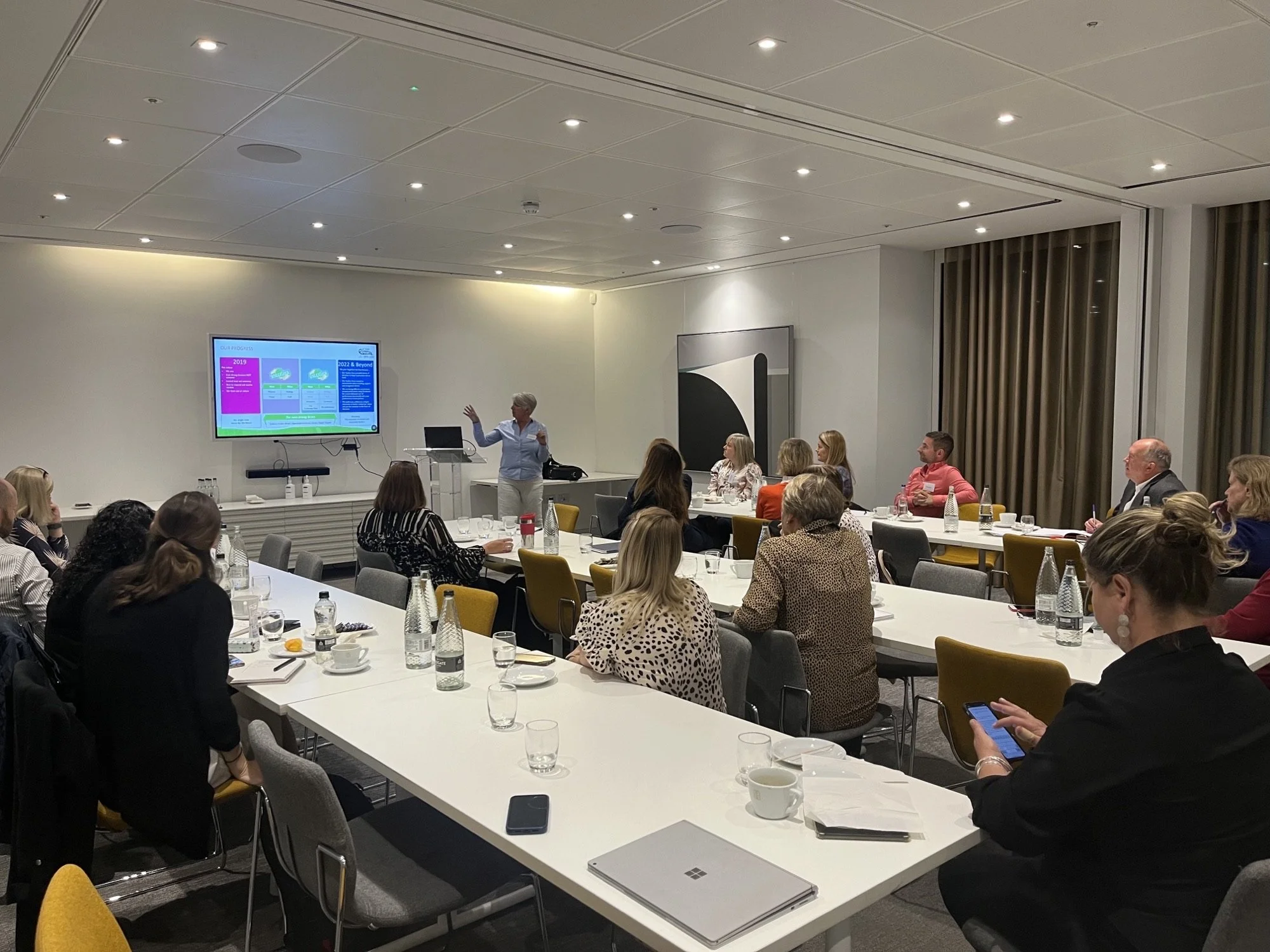
That was the challenge at WM Trains Ltd and the subject of our latest HarknessKennett online session, where we were joined by Rebecca Glover-Knight from WM Trains Ltd to talk about the award-shortlisted engagement campaign we worked on together to make operational performance feel relevant to every colleague.
The campaign was built around a simple idea: Every Minute Matters. Every Role Counts. But behind that message was a much bigger communications challenge: turning performance targets into something colleagues could understand, relate to and, most importantly, act on.
What does it mean to me?
WM Trains Ltd operates London Northwestern Railway and West Midlands Railway. Following the move into public ownership, the business is working towards ambitious rail-industry targets for 2031: 90% of trains arriving within three minutes of their published time and cancellations below 2%.
Targets like these can easily feel remote from people’s everyday jobs. The engagement campaign was designed not only to make sure colleagues knew what the targets were, but also to help them make the connection between what they do, how the railway performs and the customer experience.
Audience insight
An earlier internal communications audit that we conducted had provided us with critical context and a depth of understanding about how colleagues in different parts of the organisation consume information – whether they’re on a night shift in a depot, working on trains, in stations, in control, or office-based colleagues. From this we learnt that Drivers valued a printed newsletter, frontline colleagues responded to tangible, visible materials, and managers were an important source of information for many employees. That intelligence directly informed the campaign.
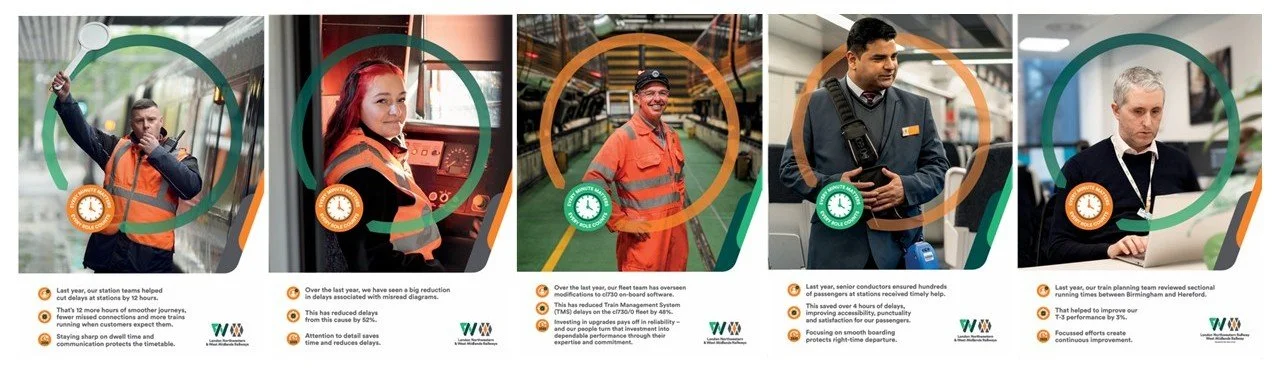
In a busy environment, it is important to find a way to cut through the operational noise. A dedicated week provided that. Prioritising the need to take the messages to the places people work, we used bunting, banners, mirror decals, employee-profile posters and even branded water bottles - all playing their part in raising the profile of the messaging – and supported by more detailed communication through email and desktop takeovers.
The central role of managers
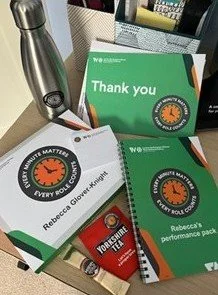
One of the strongest findings from the original audit was the importance of managers as a source of information. Pre-briefing sessions were run with managers – talking them through the messaging and materials and sharing expectations around their role in engaging their teams. They received personalised packs containing:
the key performance messages and targets
a suggested team-meeting agenda
practical actions teams could discuss
thank-you cards to recognise individual contributions
a poster where teams could record their own commitments.
The important bit was the conversation and involving teams in planning, rather than simply sharing a centrally centrally produced message. They were asked: ‘What can we do here to improve performance?’
And the evidence afterwards suggests those conversations mattered. Colleagues who had discussed performance with their team showed significantly better understanding of the 90% and 2% targets – and of the part they personally could play – than those who hadn’t.
Listening to colleagues
Asking employees what they could do differently also produced something very tangible - more than 200 suggestions for improving operational performance. Some were straightforward fixes and other ideas raised broader questions about training and communication between different roles. WM Trains Ltd has continued to work through those ideas and introduced “you said, we did” communications to show colleagues what has changed as a result. They continue to ask colleagues for ideas – taking advantage of the insight from colleagues across the organisation.
Sustaining the focus to enable change
A single campaign can create focus, but communication and engagement needs to continue long after the launch moment if you want a business priority to become part of how people work.
WM Trains Ltd has been doing exactly that: performance now features regularly in team meetings; colleagues can continue submitting improvement ideas; employee stories are appearing in weekly newsletters; a live performance dashboard is being extended onto screens in depots; and local events are exploring performance issues specific to individual routes.
What can other IC teams take from this?
For us, there are five useful principles from the experience:
Start with insight, not channels- understand how people actually receive and use information before deciding how to communicate.
Translate the target into “what does this mean for me?” - awareness of a business goal isn’t enough.
Equip managers to create conversation – not just messages to cascade.
Give employees a way to influence the outcome - involvement creates ownership.
Think beyond the campaign - the launch creates attention; reinforcement and integration are what help make a behaviour stick.
How well do people in your organisation understand the part they personally play in delivering its biggest business priorities?
If the answer isn’t clear, it may be worth looking beyond the next campaign and asking what would help turn your strategy into meaningful conversations, local actions and everyday behaviours.
Published by Nicky

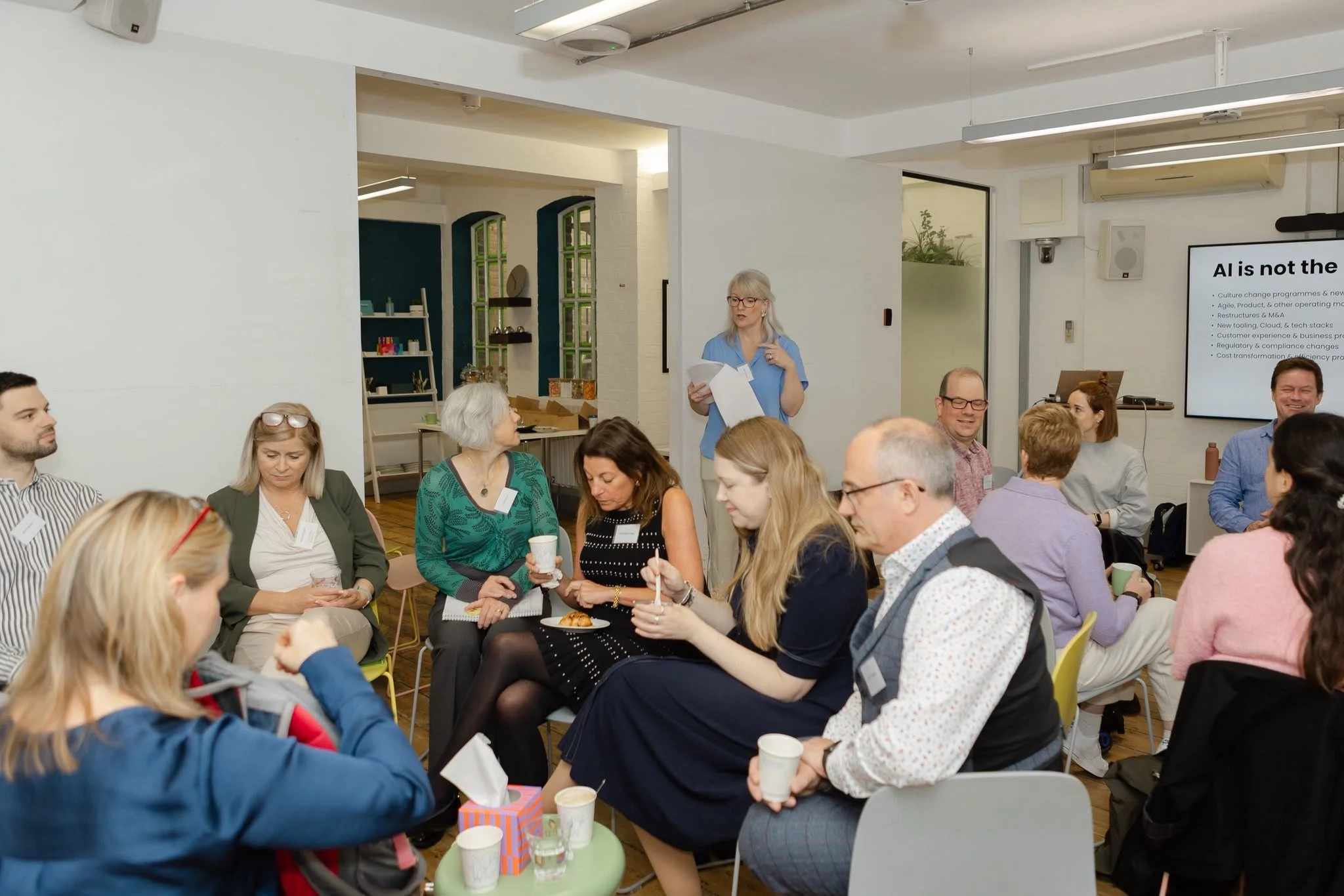














On a cold June, morning, we welcomed around forty communicators to a workshop on a theme that is very topical at the moment: How Internal Comms can spark AI adoption.
We were joined by Becky Williams, Communications Consultant and Coach, and Paul Middleton, Internal and Change Communications Consultant (currently contracting at Flutter Entertainment); who shared with us how comms teams can start adapting, reduce fear, encourage safe experimentation, support leadership role‑modelling and build momentum that spreads beyond the early adopters.