When life gives you lemons…(or how to cope with interview rejection)

We’re all familiar with that period of anguish after an interview when we’re waiting for feedback. In the end, the agony can be worth it if you get the role. But what if things don’t go according to plan and you’re met with rejection? There’s no doubt about it - it can hurt!
However, as the saying goes: ‘when life gives you lemons, make lemonade’. In order to improve, we need to learn to see every rejection as a learning opportunity which will help to set us up for success in the future. Here are some tips on how to move forward after interview rejection, and how to make your lemonade all the sweeter:
Quiet the negative voice in your head and restore your confidence
Losing out is never fun, so take the time you need to gather your thoughts and get into the right headspace to move forward. Treat yourself to a little indulgence and be kind to yourself. Remind yourself that you did well to get an interview; a job rejection doesn’t define you or undermine your achievements.
Ask for feedback
Seeking feedback calls for courage but can be invaluable in helping you understand why you didn’t succeed at interview, and how you avoid this in future. Let them know that you’re still actively continuing your job search and would value any insights they have about why they didn’t feel you were the right candidate on this occasion. Not everybody will provide feedback and some companies have policies against it. If you get some helpful feedback in return, that’s great, you can work on it. But if not, even asking shows that you’re someone who can move on from disappointments and is willing to learn from them. You may also find out that you were a close second for the role and would be considered in future for another!
Remember what you did right
While it’s easy to beat yourself up, try to avoid it! Revaluate the interview and think about where things didn’t go as smoothly as you would have liked and reflect on what went well. Write it down whilst it’s still fresh in your mind. A 2-column approach of ‘what went well’ and ‘what I could have done better’ is useful. You can use this as a plan on how to tackle interviews differently in the future, and perhaps compare your next interview to see how you’re improving. After all, if you only focus on the negatives, you won’t be able to see the positives. Instead of blaming yourself for the failure, applaud yourself for landing an interview with a great company, and know that if you were able to do it once, you’ll be able to do it again.
Stay positive & determined
Sustaining a positive mental attitude is crucial during this phase and you will need to be calm and collected to focus on the next opportunity. Remember, you are not alone, and that your patience, dedication and hard work will pay off.
Know what you can’t control
While you can control some things about the interview process that may affect the outcome, there are other things you can’t control. You might feel that you’ve given the best interview of your life but remember that there may be deciding factors you won’t be aware of.
Remember too, that sometimes it’s simply about ‘fit’. Perhaps there was another candidate with the same skills and experience level as yourself, but they just connected better with the interviewer. Often there’s little you can do about this, but ensuring you’ve researched the organisation’s values and purpose statements will help you get off on the right foot with the company culture.
Be gracious
Even if the last thing you want to do is connect with the company that turned you down, you should. Send an email thanking the interviewer for the opportunity and stressing that although you may not have been the right fit for this position, you would still like to be considered for any future roles. It will leave the door open to the chance of working with the company in the future.
We’re always happy to offer application and interview advice, or simply to have a chat to help keep the spirits up! - please feel free to get in touch.
Published by Tanya
You may also like:
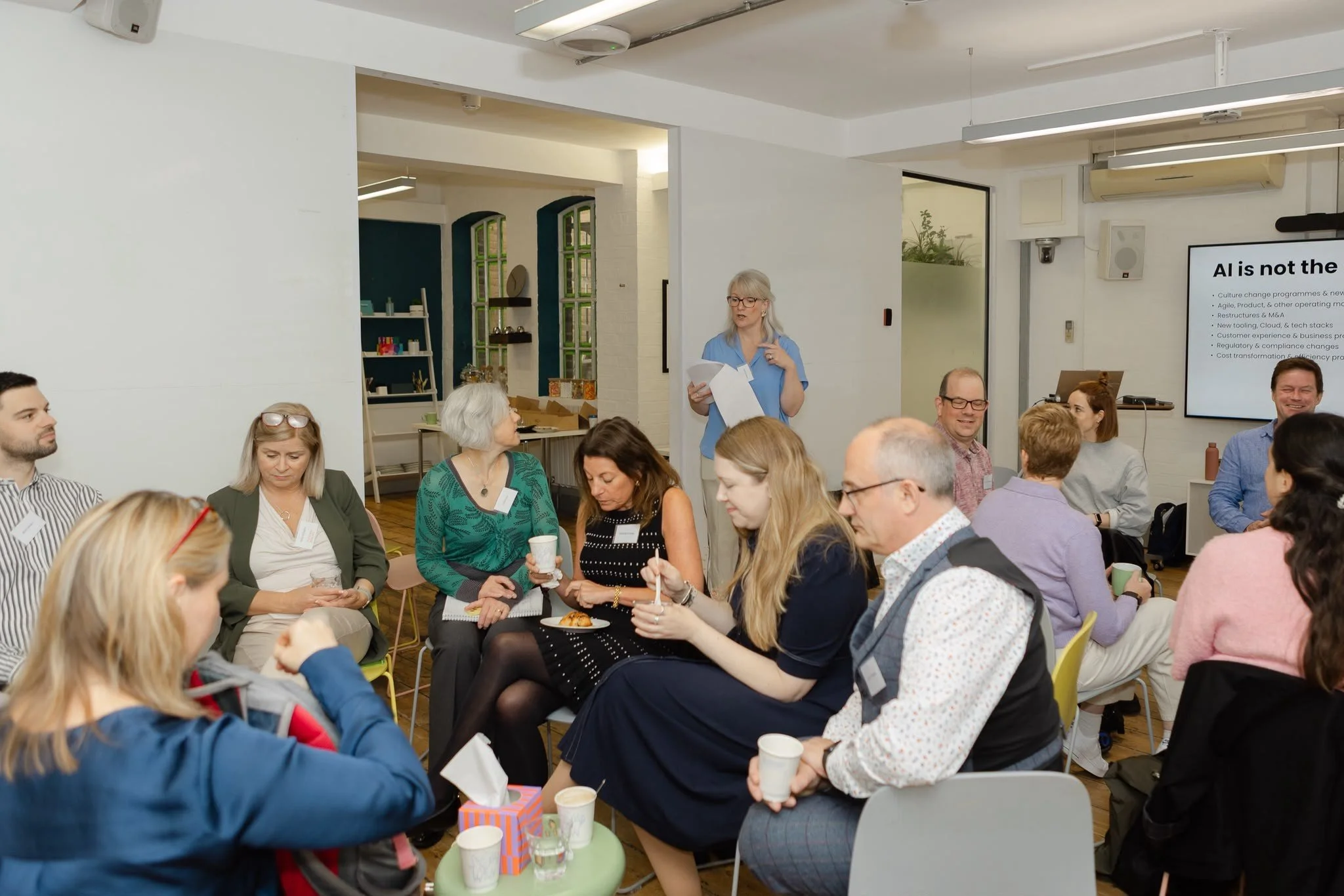
On a cold June, morning, we welcomed around forty communicators to a workshop on a theme that is very topical at the moment: How Internal Comms can spark AI adoption.
We were joined by Becky Williams, Communications Consultant and Coach, and Paul Middleton, Internal and Change Communications Consultant (currently contracting at Flutter Entertainment); who shared with us how comms teams can start adapting, reduce fear, encourage safe experimentation, support leadership role‑modelling and build momentum that spreads beyond the early adopters.

How do internal communicators demonstrate they’re making a meaningful difference - not just generating clicks or impressions, but genuinely shifting understanding, behaviour, and business performance?
That question shaped our session on Wednesday 11th March, Designing Meaningful Measurement: Aligning Internal Comms to Outcomes That Matter.

On the wet and windy morning of Wednesday 19th November, we welcomed internal communicators, HR and business leaders to an in-person breakfast briefing in London to explore a topic that’s on everyone’s mind right now:
How is AI really changing internal communications – and what should we do about it?

On Wednesday, September 10th, we gathered virtually for a powerful session exploring neuroinclusive communication - an increasingly vital topic as organisations embrace cognitive diversity and strive to create truly inclusive workplaces.

Good internal communication is evident when people understand how their day-to-day work contributes to the firm’s goals. It’s called the Kennedy moment. When in 1962 Kennedy visited NASA for the first time, he asked a janitor carrying a broom what he did, to be told “I’m helping put a man on the moon.”

A packed room at the Sutherland Labs in Covent Garden gathered to hear what Being your Best in 2025 was all about. This was a different format from the usual HarknessKennett networking breakfasts which have over the years featured case studies and best practice on a range of issues across many sectors.

Unbelievably, October is already in full swing, but the good news is that it was time for another of our networking breakfasts! We love these sessions, and the enthusiasm that participants and speakers alike bring as they enjoy the opportunity to share great case studies and discuss strategies with peers (old and new) is inspiring.

For as long as I’ve been in comms, line managers have come in for a bit of stick. Lots of blame for poor communication is placed at the feet of these poor individuals who are expected to deliver against a staggering array of responsibilities – everything from performance targets to staff development, innovation to cost control – and in the middle of that we want them to ‘deliver communication’ as well. Line managers are often seen as a tricky middle layer where communication gets ‘stuck’, and which seems impermeable to frustrated comms teams and senior leadership. But is it fair to blame them, or should we be blaming the comms team, senior leaders….or someone else?

The power of an interconnected EVP and Employer Brand informed by research, colleague involvement, and cultural indicators, and that when brilliantly conceptualised, connected, and executed, it can unleash strategic, cultural, and reputational opportunities.

Today’s breakfast session was even more energised and interactive than usual, and no wonder with such an evocative subject at the heart of our discussions! Safe to say AI is here to stay, and we’re all only just starting to get to grips with it – what it can do for us, the pitfalls and all the governance issues it raises. Kudos to Katie Marlow and Lisa Pantelli for agreeing to present today – as finding anyone confident enough to share their thoughts on this topic was not easy! Katie shared insights into how she uses AI within her consulting practice, and Lisa provided a whistle-stop tour of definitions, and an overview of how she uses AI in her role as Director of Communications at Elsevier.

The room at today’s breakfast session was packed with IC pro’s – all keen to hear fresh ideas around the thorny topic of how best to support your leaders to deliver effective communication.

We’re regularly asked by candidates and clients alike about the current ‘state of the market’ – and often that’s a hard question to answer! With another new year just around the corner, experience shows that a lot of people may take the opportunity for some reflection on their career aspirations during the festive break – and companies may be gearing up to start their candidate searches in the new year.

We’re regularly asked by candidates and clients alike about the current ‘state of the market’ – and often that’s a hard question to answer! With another new year just around the corner, experience shows that a lot of people may take the opportunity for some reflection on their career aspirations during the festive break – and companies may be gearing up to start their candidate searches in the new year.

Once regarded as a specialism, having the skills to support change initiatives is now arguably a pre-requisite for our everyday toolkit as communicators! With the help of a little Slido interaction, Phil and Lou really brought the conversation to life and it was great to hear so much discussion around the topic. Here are their top tips for making sure your change comms hit the mark:

We were delighted to get together with some of our network last week for a breakfast session on the role of IC professionals in supporting ESG. Huge thanks to our client, Hyve for hosting us in their fabulous Paddington offices!

ESG can help organisations articulate, live and breathe a sense of purpose and meaning that is good for our people. And it’s good for business too - affording genuine competitive advantage, not just some standardised thing that’s indistinguishable from others in the same industry.

I’ve been taking a look at structure, culture and power sources within organisations and how this impacts internal communication. In this final blog of three I’ll be looking at organisational power sources. Whilst this isn’t meant to be an academic paper, you’ll find here a brief overview of some of the models, and the references are listed at the end if you want to go and find out more. Obviously – there are lots of models out there – and this is not an exhaustive review of them all!

I’ve been taking a look at structure, culture and power sources within organisations and how this impacts internal communication. In this second blog of three I’ll be looking at organisational culture. Whilst this isn’t meant to be an academic paper, you’ll find here a brief overview of some of the models, and the references are listed at the end if you want to go and find out more. Obviously – there are lots of models out there – and this is not an exhaustive review of them all!

I’ve been taking a look at structure, culture and power sources within organisations and how this impacts internal communication. In this first blog of three I’ll be looking at organisational structure. Whilst this isn’t meant to be an academic paper, you’ll find here a brief overview of some of the models, and the references are listed at the end if you want to go and find out more. Obviously – there are lots of models out there – and this is not an exhaustive review of them all!

As a business that’s worked a lot with partnerships and professional services, I took that there’s much learning not only within the sector to be shared but also with other organisations on how engagement and collaboration can make for better communication.

We’re hoping to celebrate throughout the year – and to get the ball rolling we thought we’d share 21 facts about HarknessKennett that you may not have known about:
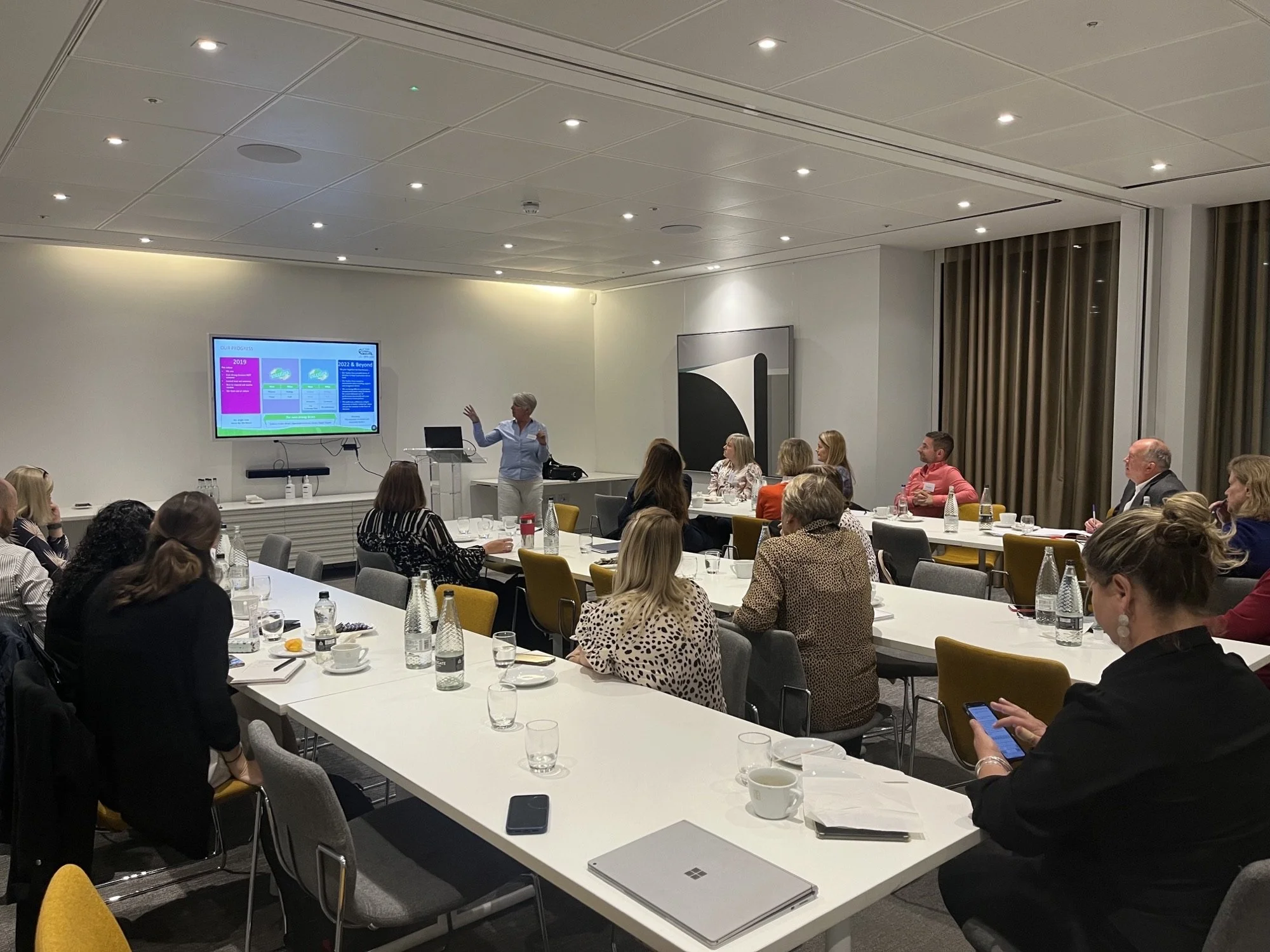
It was a real treat today to be back face-to-face at one of our breakfast sessions after more than two years of running them virtually. It was a reminder to everyone just how important it is to meet ‘IRL’ (in real life) and was a living example of the benefits of face-to-face communication!

It’s not new news that front line managers are key to successful internal communication, particularly during periods of change, but the challenges of implementing effective line management communication is something that many organisations still struggle with.

I was delighted to be asked to present at the CIPR Inside and CIPR South West group on Workplace Wellbeing on Wednesday 18th May. Unusually, I was asked to present as a trustee of iprovision and not in my usual day job as a comms pro. I’ve been a trustee of iprovision since March 2019 and it was a great opportunity to showcase some of the great work iprovision does.

More people are leaving their jobs voluntarily than at any time before; it has become apparent that nearly half of the employees who voluntarily left the workforce during the pandemic aren’t planning on coming back*.

Here at HK ‘Workshop Day’ always brings great excitement – and last week’s was no exception. We were particularly pleased to be able to share a joint case study with our client Susan Quain, Associate Director of Global Digital Channels at Fidelity International. During last year and despite the ongoing challenges of the pandemic, Susan and her boss joined forces with our Associate Director Chris Crofts and HK Partner James Harkness to deliver a bespoke training programme to build a world class communications team.

Well, the end of 2021 is not the one any of us had hoped for, with Covid-19 once again reinventing and causing chaos. So here at HK, with our Christmas meet-up on ice and in a bid to stay positive, we’ve taken a few moments to reflect on the last 12 months. At the end of this second crazy year, we know that we still have much to be thankful for. So, in the words of Ian Dury, here’s our reasons to be cheerful….

Like me, I’m sure most of you still revert to the old school days’ habit of clearing your desk in preparation for the new school year. Not only can it serve as a boost of inspiration, that sense of a fresh beginning can do wonders for your productivity levels, positive mindset and creativity.

In our most recent HarknessKennett networking session, we brought together three guest speakers, career coach Vicky Marinker, hiring manager Amy Knights-Whitton, and experienced communications professional Claire Lucraft, to discuss how the market is changing and what communications professionals can do to remain visible, relevant and in demand.